
























































Highlights:
- Videos frequently rank at the top of search engine results, boosting SEO and increasing traffic to your website.
- A B2B marketing video on its own won’t cut it. It’s crucial to set specific goals, KPIs, and craft a strategic approach for each video.
B2B video marketing is one of the most impactful tools for connecting with both present and future customers, while also promoting your products and services. Over half of B2B companies have embraced digital marketing, with video playing a key role in their strategies. If you’re not yet using B2B video marketing, it should be on your marketing agenda for the upcoming year.
From a sales standpoint, there’s a significant distinction between B2B leaders and their B2C counterparts. While both are selling a product, B2C targets individual consumers outside the corporate world, whereas B2B focuses on reaching industry professionals.
Nevertheless, when considering B2B video content, the gap between B2C and B2B marketing isn’t as broad as one might think.
Why Video Marketing Works for B2B Businesses?
Videos are a powerful way for B2B marketing, providing a unique ability to consider complex products and services. In contrast to traditional text or graphics, videos can efficiently convey data that captures the audience’s attention and drives engagement.
By adding videos to their marketing strategies, B2B businesses can enhance brand awareness, generate leads, and ultimately boost sales.
Let’s peek into how videos help in boosting your B2B business:
- Videos create an emotional connection between the company and its clients in a way that few other mediums can relate.
- There are high chance that videos go viral on social networks, connecting with thousands of people organically with no headache of paid advertising.
- High-quality videos help you look good from the rest of the overwhelming marketing content.
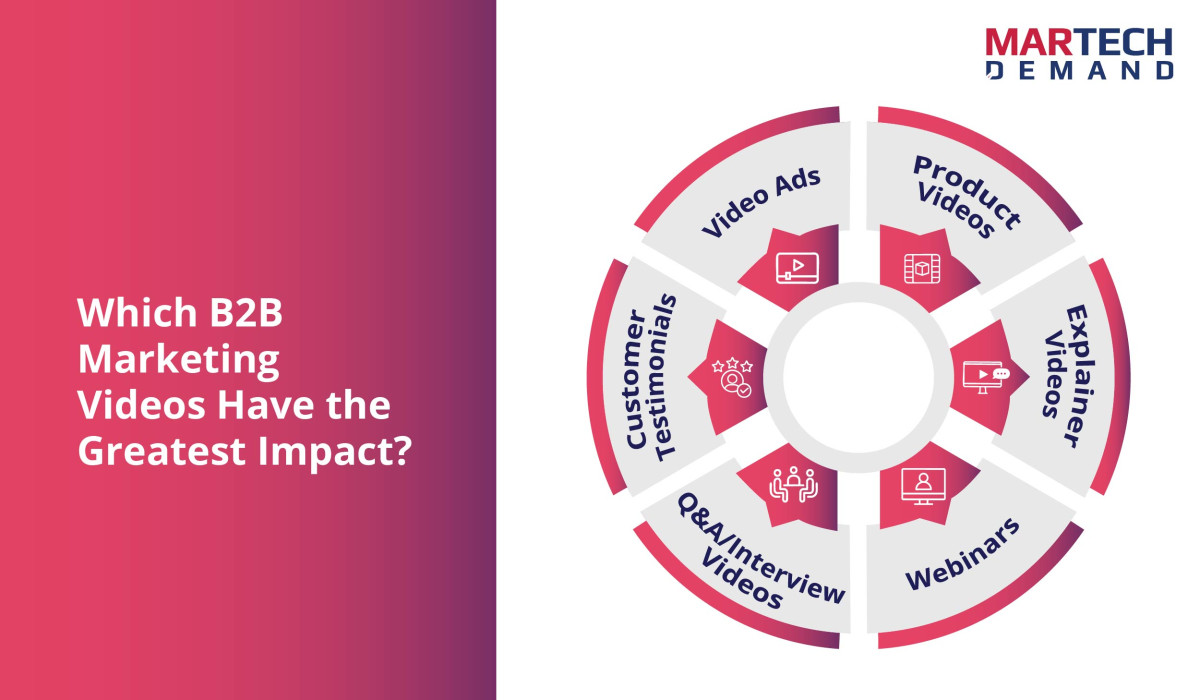
- Videos engage your audience on social media, educate with demos, boost sales through testimonials, and support decision-making with webinars.
Plan for a Better B2B Video Marketing Strategy
An effective B2B video marketing strategy is necessary to engage your target audience, build trust, and drive growth.
With video content continuously growing, companies need to use it tactically to exhibit products, share insights, and boost client relationships.
Here are some strategies:
-
Set clear campaign goals
Creating just a B2B marketing video won’t be enough on its own. With that, you must set specific goals and KPIs for each video with a particular strategy in mind.
Try to keep your main objective in mind when making decisions about your video. Focusing on a single goal guarantees clarity in both content and style. Also, think about which stage of the sales funnel your video is intended to target.
For instance, to enhance brand awareness, create videos that showcase your company’s history and follow them up with customer testimonials. This approach helps potential clients gain a deeper understanding of your business and the services you offer, fostering trust and engagement.
-
Select a video type and determine its role in your strategy
To stand out in a crowded marketplace, it’s essential to experiment with a variety of video formats to discover what best aligns with your marketing goals. Choosing the right format is crucial for achieving specific objectives; for instance, brand videos are highly effective during the awareness stage, as they help introduce your brand and engage potential customers. In contrast, case studies are ideal for the middle and later stages of the buyer’s journey, providing in-depth insights that build trust and demonstrate the value of your offerings.
By strategically selecting video formats that resonate with each phase of the buyer’s journey, you can enhance engagement and drive better results.
-
Ensure your videos are high-quality and visually engaging
To effectively attract your target audience, B2B videos must be of the highest quality and visually appealing. Achieving this standard requires a strategic approach: you can either invest in the necessary equipment, time, and expertise to produce engaging videos in-house or collaborate with a professional production team to ensure a polished and impactful final product. By prioritizing quality in your video content, you not only enhance your brand’s credibility but also foster deeper connections with your audience, ultimately driving better business outcomes.
-
Leverage social media to reach a broader audience
Simply publishing your videos to your company’s YouTube channel is not sufficient. You need to share them across various social media channels to broaden your reach.
Also, enhance engagement by replying to comments and connecting with your followers through feedback.
-
Measure the success of your video
You need to monitor your video’s performance. There are two reasons behind it:
First, without tracking the results, you will not understand how closely it achieved your goals.
Next is, verifying the data to assist refine future video marketing initiatives, especially if results are not close to expectations.
Case Study: A Successful B2B Video Campaign
UBITS is an online learning platform offering bite-sized training modules. It aims to foster lifelong learning in Latin America. With Y Combinator’s backing and seed funding, UBITS has rapidly launched over 200 courses. HubSpot has been crucial in automating sales and marketing processes, enabling efficient lead tracking and data-driven decisions. The workflow tool within HubSpot streamlines operations and improves team collaboration. UBITS emphasizes the importance of strong sales and marketing tactics for business growth.
Hence, HubSpot is a platform that makes relatable customer success videos that engage decision-makers to take action.
Benefits of B2B Video Marketing for B2B Businesses
B2B businesses utilize video marketing to enhance engagement, increase brand visibility, and drive growth.
Also, with growing consumer expectations for visual content, videos provide a better way to connect with potential clientele. It has below advantages:
-
Higher revenue
Video marketing increases brand awareness, builds credibility, and drives more website traffic, leading to higher conversion rates. Engaging videos can directly impact sales and generate higher revenue by encouraging purchases and boosting interactions.
-
Influence buying decisions
Buyers are more likely to watch product videos and testimonials before making a decision. Video grabs attention with visuals and sound, fostering trust and helping buyers easily understand your products and services.
-
Meet customers where they are
Consumers prefer video content over text, images, and links. To capture their attention and engage with them, businesses need to prioritize video.
-
Rank higher in search
Videos often appear at the top of search engine results, improving SEO and driving more traffic to your site. Websites with video content also tend to rank higher due to increased visitor engagement and longer time spent on pages.
-
Increase traffic
Embedding videos on your site attracts quality traffic and encourages visitors to explore your content. Video content also helps improve your SERP ranking, further boosting web traffic.
Conclusion
B2B video marketing is the best tool for modernizing traditional marketing strategies. It helps to boost brand awareness and drive results.
Also, by setting clear goals and promoting high-quality videos across various platforms, businesses can nurture and engage their audience, influence buying decisions, and improve SEO.
Finally, with the right approach, video marketing can effectively increase revenue and restore customer trust. So, it is nothing but a key element of a successful video marketing strategy.
Enhance your expertise by accessing a range of valuable sales marketing-related whitepapers in our resource center.